
Utility locate
Before you dig, buried lines must be marked. The locate request itself may cost little, but the wait and any private locate on a large lot add time. Give it a line so the schedule and cost stay honest.
A monument sign estimate adds up the base, the sign body (cabinet or dimensional letters), materials, footing and excavation, utility locate, electrical, lifting by weight, permits, drawings and survey. SignEstimator builds each line from your rates and shows the real margin before you bid.
A monument sign looks like one object. In a bid it is a small construction job. You fabricate a sign, pour or set a base, dig a footing, bring power across a lot and lift a heavy piece into place. Each part has its own cost and its own risk.
Shops lose money on monuments in the same places again and again. The footing is bigger than planned. The electrical run is longer. The permit needs stamped drawings. The crane day costs more than the install crew. When those lines are missing from the estimate, the margin disappears after the job.
SignEstimator has a monument template that lists every part. You fill in the size, choose the build type and site conditions, and the estimate pulls materials and rates from your library. Nothing is left in your head.
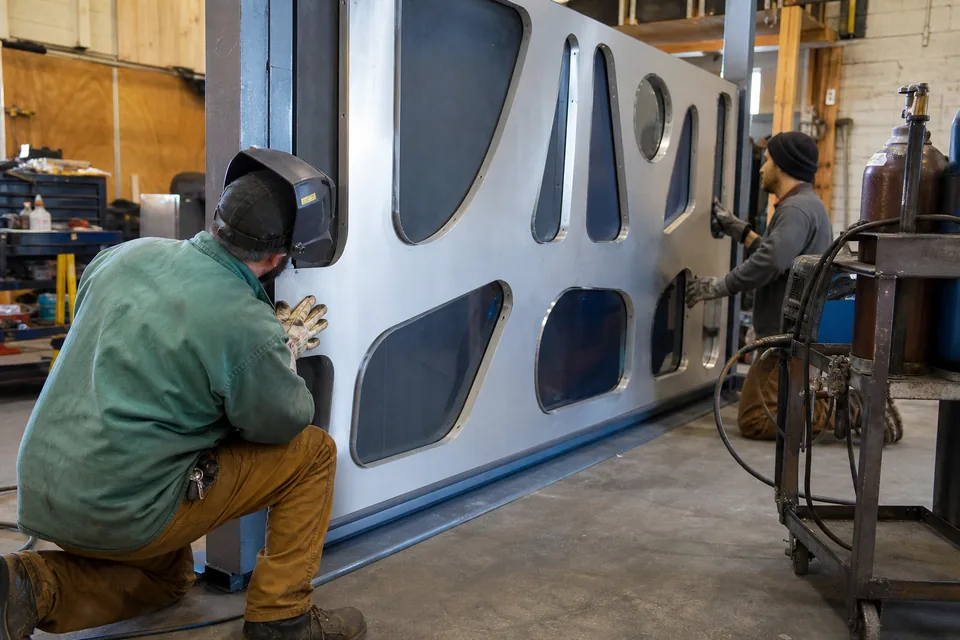
The sign body is either a cabinet with faces or dimensional letters mounted on a wall face.
A cabinet monument has an aluminum frame, routed or flat faces and internal lighting. Price the cabinet by its size and depth, the faces by area, and the LED modules and power supplies by the lit area. SignEstimator counts modules and power supplies for you from your module spacing and power supply size.
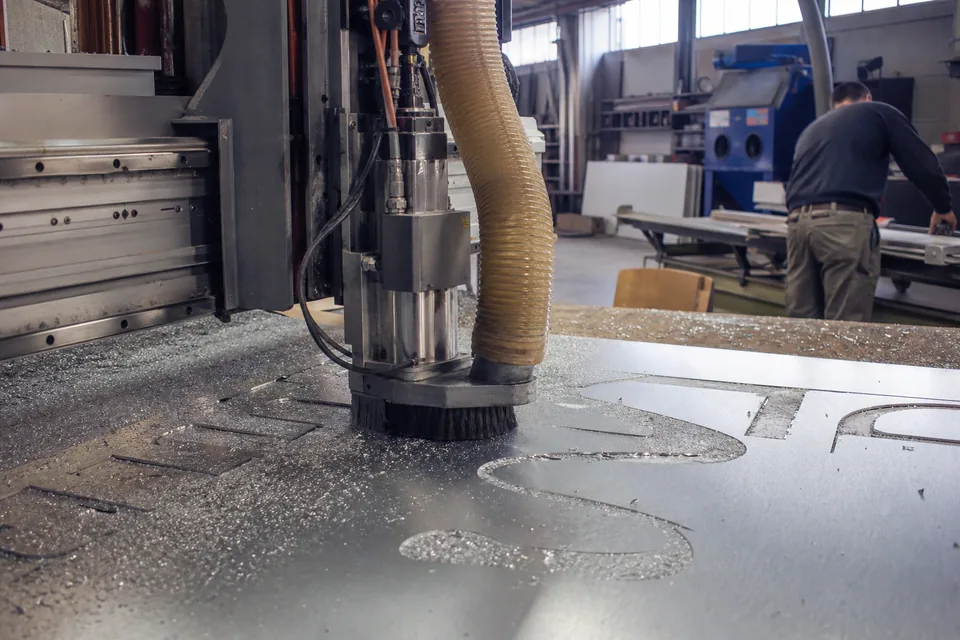
A dimensional letter monument has cut letters, often aluminum or acrylic, pinned to the base face. Price letters by count, height and stroke. If the letters are lit, add channel letter style returns, LED modules per foot of stroke and power supplies. For lit letter details, see pricing a channel letter sign.
Material is the biggest choice in a monument bid. It changes weight, labor, lifting and lead time.
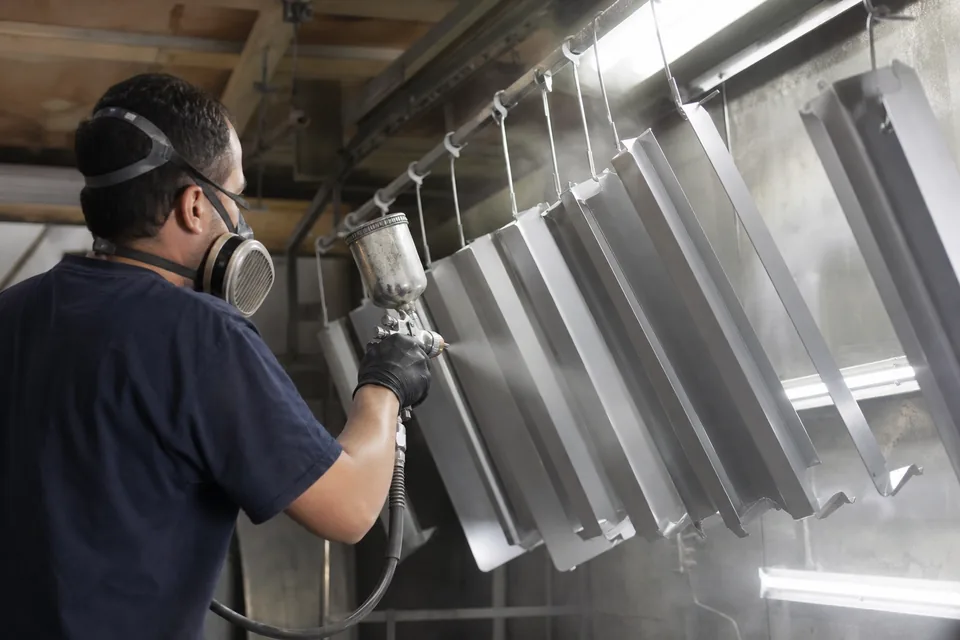
SignEstimator keeps each material in your library with unit cost, sheet size and waste factor, so nesting and waste are worked out the same way every time.
The footing holds the sign against wind and keeps it level. Its size comes from the sign size, the soil and your engineer. Price excavation by volume or by machine hours, concrete by the cubic yard with waste, and rebar and anchor bolts by the piece. Add a line for hauling away spoils if the site needs it.
Before you dig, buried lines must be marked. The locate request itself may cost little, but the wait and any private locate on a large lot add time. Give it a line so the schedule and cost stay honest.
A lit monument needs power from the building or a nearby panel. Price trenching per foot, conduit and wire per foot, the disconnect and the hookup. If a licensed electrician does it, add it as a subcontractor line with your markup.
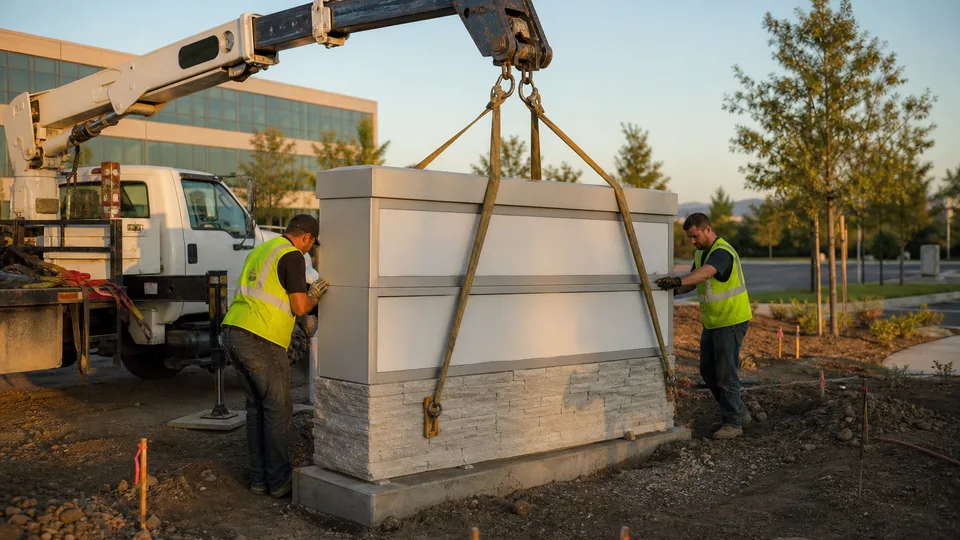
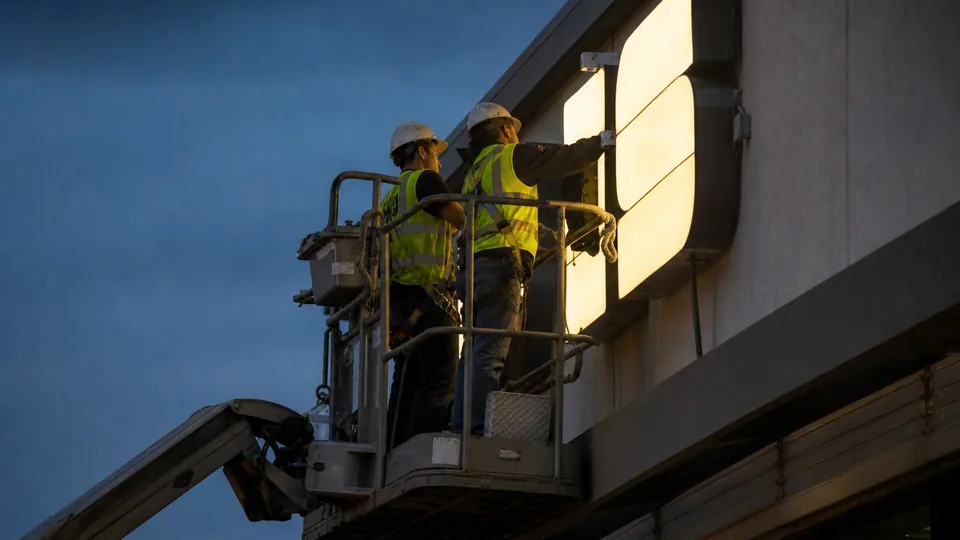
Lifting depends on weight and reach. A light foam monument may need only a crew and a small truck. A heavy aluminum or masonry piece needs a boom truck or a crane, priced with mobilization and hours on site. SignEstimator picks the lift or crane class from the weight and height you enter and adds your rate for that class.
Many towns need a sign permit and stamped engineering drawings for the footing. Some sites need a survey to confirm setbacks from the property line. Add each as its own line. If you pay a third party, add it as a subcontractor cost with markup, so the time you spend on paperwork is covered too.
For more on lift classes, crews and travel, read how to quote sign installation and see sign installation estimating.
This is an example job with example rates. It shows how the lines add up. Use your own rates in SignEstimator.
In this example, the job is a double sided aluminum cabinet monument, 8 ft wide by 5 ft tall, with routed lit faces, on a foam core base with a stucco style coating, installed 40 feet from the building.
| Line | How it is calculated | Example amount |
|---|---|---|
| Aluminum cabinet | Sheet stock with nesting and waste, router and bender hours | $2,150.00 |
| Faces and backing | Routed faces with acrylic push through, by area | $1,280.00 |
| LED modules and power supplies | Modules by lit area, two 100 W power supplies | $640.00 |
| Foam core base with coating | Foam by volume, coating by area, shaping hours | $1,350.00 |
| Footing and excavation | Machine hours, concrete with waste, anchor bolts | $1,100.00 |
| Utility locate | Request and site time | $150.00 |
| Electrical | Trench, conduit and wire for 40 ft, hookup | $1,400.00 |
| Boom truck | Class by weight, mobilization and 3 hours on site | $850.00 |
| Install crew | 2 installers, 6 hours each at $60 per hour | $720.00 |
| Permit and engineering drawings | Fees and drafting time | $900.00 |
| Overhead | 20 percent of cost | $2,108.00 |
| Cost total | Sum of lines | $12,648.00 |
| Sale price at 40 percent margin | Cost divided by 0.60 | $21,080.00 |
Example numbers, use your own rates. In this example, no survey is needed because the setback is clear on the site plan. If it were not, the estimate would add a survey line before the footing.
Monument jobs change. The owner wants stone instead of coating, or the footing grows after the engineer reviews it. On the Shop plan, change orders add or remove lines from the approved quote and send a new approval link, so the price and the scope stay matched.
Monument bids often start as an architect drawing or a site plan in a PDF. Upload it. The AI draft reads sizes, materials and notes into a draft spec, and the monument template turns it into lines. Pricing always uses your own materials and rates. You check every line before the quote is sent.
On the Team plan, the approved job moves to the jobs board with production work orders, cut lists and machine time per station. The install calendar books the crew and the boom truck or crane on the same day, and job costing compares actual hours and materials with the estimate.
Pylon and channel letter jobs use the same engine. Start with the sign pricing calculator to see how other sign types are priced.
The base, the sign body (cabinet or dimensional letters), materials, LED modules and power supplies if lit, footing and excavation, utility locate, electrical, crane or boom truck, install crew, permits, engineering drawings and survey. Add overhead and your margin.
Foam core with coating is light and quick to install. Masonry adds mason labor and weight. Aluminum fabricated adds sheet stock, router and welding hours. Weight also changes the lift class, so material affects install cost too.
Price excavation by volume or machine hours, concrete per cubic yard with waste, and rebar and anchor bolts per piece. The footing size comes from your engineer and the soil. Keep it as its own line so changes are easy.
It suggests a lift or crane class from the weight and height you enter and adds your rate and mobilization for that class. You can change the class on any estimate.
Yes. Add a subcontractor line with the quoted cost and your markup. It shows in the real margin preview like any other line.
Run one demo estimate on the homepage without an account. Plans start at $24 per month billed yearly. There is no free plan and no trial. Cancel from the billing page anytime and export your quotes and customers anytime.