What we priced
One single tenant pylon for a retail pad site, the kind of job a regional sign shop bids every few weeks.
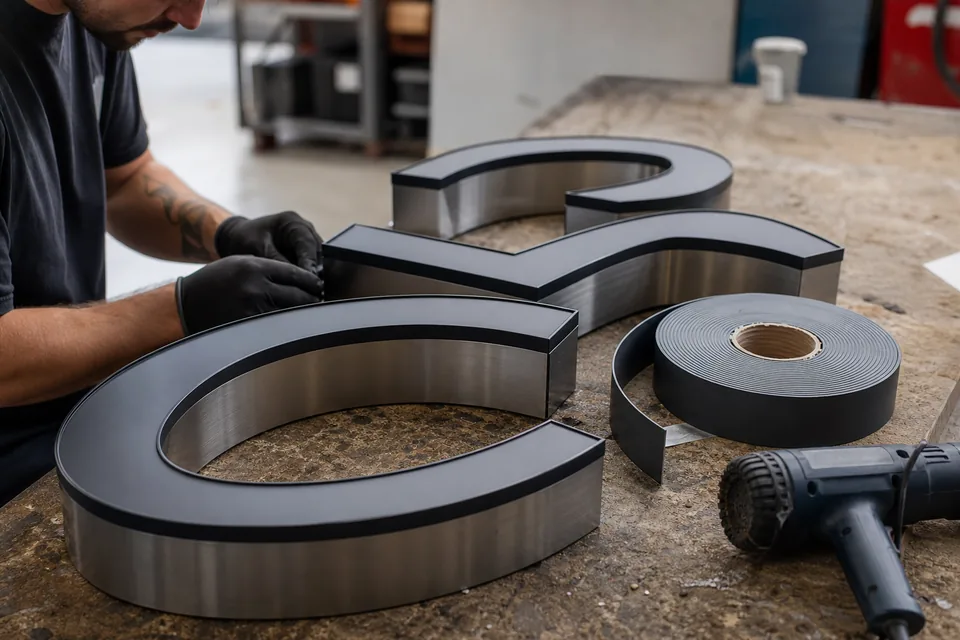
- Cabinet 8 ft wide by 6 ft tall, two faces, extruded aluminum with polycarbonate faces and translucent vinyl.
- Internal LED modules and 100 W power supplies, UL labeled.
- One 6 inch schedule 40 steel pipe, 33 ft long including the part buried in the pier, with an aluminum pole cover.
- Overall height 25 ft, drilled concrete pier, anchor bolts, engineered drawings.
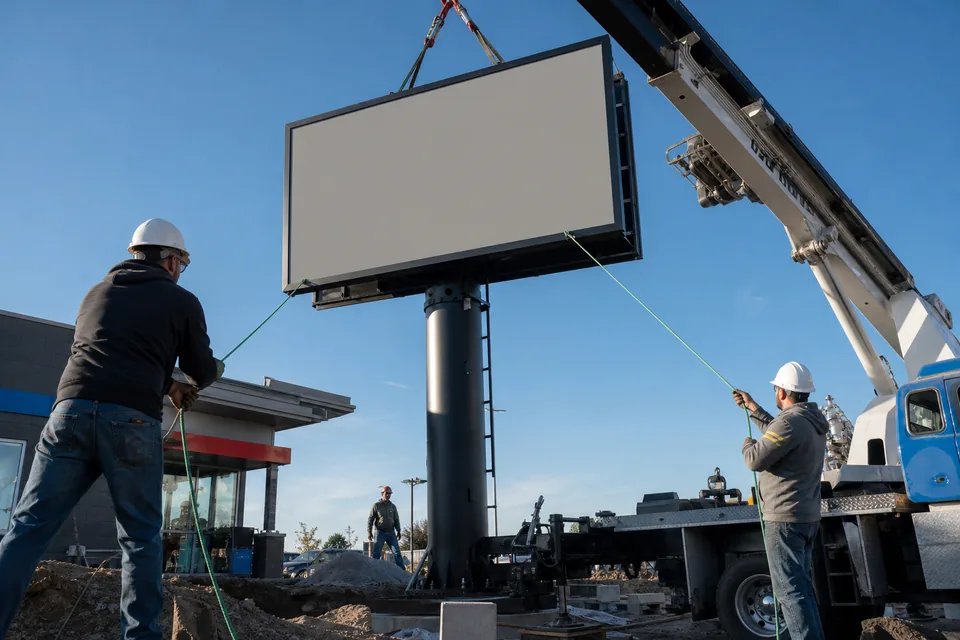
- Install with a 17 ton boom truck crane and a crew of three, 30 miles from the shop.
Costs are example costs from our starter library, waste included: polycarbonate $260 a sheet, .125 aluminum $310 a sheet, 6 inch pipe $38 a foot, concrete $185 a cubic yard, LED modules $3.10, fabrication $28 an hour and install crew $32 per person hour. Your own rates will differ. The structure of the estimate will not.
Pylon sign pricing broken into ten lines
| Line | Cost | Share of cost |
|---|---|---|
| Cabinet faces, vinyl and extrusion | $1,824.54 | 12.6 percent |
| LED modules (308) and power supplies (7) | $1,389.08 | 9.6 percent |
| Steel pole and aluminum pole cover | $2,705.50 | 18.6 percent |
| Pier concrete (5.5 cubic yards) and anchor bolts | $1,264.25 | 8.7 percent |
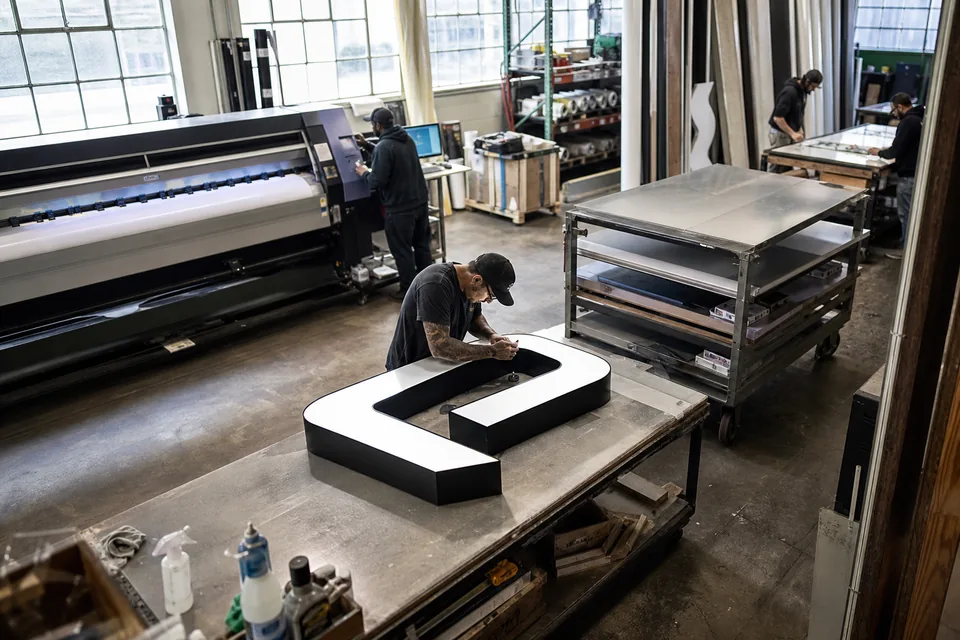
| Shop labor (drawing, print, fabrication and paint, UL test) | $1,227.20 | 8.5 percent |
| Permit drawings, filing hours and permit fee | $768.00 | 5.3 percent |
| Pier drilling and engineering stamp, subcontracted | $2,400.00 | 16.5 percent |
| Install crew, 3 people for 10 hours | $960.00 | 6.6 percent |
| Crane, full day plus mobilization | $1,700.00 | 11.7 percent |
| Travel, 60 miles round trip | $270.00 | 1.9 percent |
| Total cost | $14,508.57 | 100 percent |
| Price at 40 percent margin | $24,180.96 |
The cabinet with its lighting is $3,213.62, about 22 percent of the job. The pole adds another 18.6 percent. Pier, concrete, crane, crew, travel and permit together are $7,362.25, which is 50.7 percent. A shop that prices a pylon as "the cabinet plus a pole" is bidding half a job.
The margin line uses profit divided by price. If you add 40 percent on cost instead, the price is $20,312 and the real margin is 28.6 percent. Our markup vs margin for sign shops article shows that math on other jobs.
What moves the cost of a pylon sign most
Height. Taller means a longer pole, a bigger pier, a heavier pole cover and often a bigger crane. Wind load grows with height and cabinet area, so the engineer may call for a larger pipe or a second pole. That is why the engineering stamp comes before the final price, not after.
Cabinet area and faces. LED count, power supplies, faces and vinyl all scale with area and with the second face. A 10 by 8 ft cabinet has 67 percent more face than an 8 by 6 ft one, and the lighting cost follows almost one for one.
Soil and the pier. Rock, water or a buried utility can turn a routine drilled pier into a second mobilization. Keep the drilling as a subcontract line with the driller's quote attached, and price a contingency if the soil report is missing.
The crane. In the example the crane is a full day plus mobilization, $1,700. Quoting it as a half day, $850, saves $850 on paper and costs it on site when the pole goes in slower than planned. Federal crane rules for construction work are set by OSHA in its cranes and derricks standard, and the crane company's operator and rigging requirements belong in the estimate, not in a phone call after the order.
Permit and engineering. Pylons almost always need a permit with stamped drawings. Fees and timelines vary by city. Carry permit hours and the fee as separate lines so a city that charges $1,200 instead of $600 changes one line, not your whole price.
Electrical. The sign needs a dedicated circuit to the base. If the property owner's electrician brings power, write that exclusion on the quote. If you trench it, price the trench and wire by the foot.
Five lines that disappear from pylon bids
- Crane mobilization. The day rate is not the bill.
- Pole cover. Customers expect a clean cover, and in the example the skins are about half of the pole line.
- Spoil removal from the pier hole.
- The second trip, when the inspection is scheduled after install.
- Permit hours. Someone spends a day on drawings and filing, and that day has a rate.
The same habits break install pricing on smaller jobs too. How to quote sign installation covers crew hours, lifts and travel for wall signs and channel letters.
Why a spreadsheet struggles with pylons
A pylon has more lines than any other sign a typical shop sells, and five of them come from outside companies: driller, engineer, crane, electrician and the permit office. In a spreadsheet each one is a cell someone remembers to fill. In SignEstimator the pylon template carries every line in the table above, pulls your material and labor rates, sets the crane by height and adds travel by mileage. The estimator changes cabinet width, cabinet height and overall height, and the pole, pier, LEDs and power supplies recount.
Two more things matter on a $24,000 bid. You see cost and real margin before the quote goes out, and the customer gets a branded quote with the exclusions written down. If a lightbox without the pole is what the customer really wants, lightbox sign estimating software prices the cabinet alone with the same parts, and the monument sign estimate page covers ground signs on a base.
Pylon jobs also take a deposit, often half up front, and the final payment can arrive weeks later after inspection. Keeping deposits matched to jobs is easier when the bookkeeper does not retype bank activity by hand, and a tool that turns PDF bank statements into spreadsheets handles that part of month end.
Price your next pylon this way
- Get the cabinet size, faces and overall height from the drawing or the site visit.
- Ask the engineer and the driller for numbers before you finish the bid.
- Enter the job in the pylon template and replace the starter rates with yours.
- Check crane class and hours against the site, then add mobilization.
- Set the margin, read the price per line, and send the quote with exclusions listed.
Run the numbers in the sign estimating software demo on the homepage, then compare the flat monthly plans on the pricing page. Shops that want install crews, lifts and cranes priced the same way on every job can see how it works on the sign installation estimating page.